

Data Center Challenges for Electric Utilities- Part 1
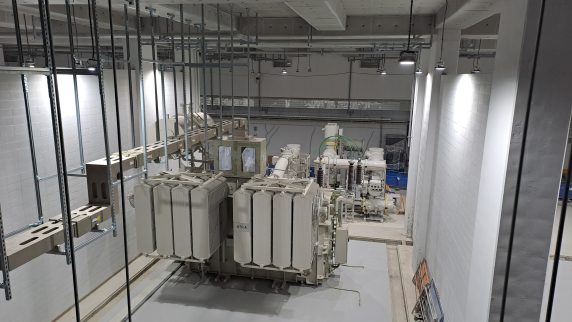
A new report from Wood Mackenzie, titled, “Breaking the speed limit: Can US data centre development outpace grid development?” noted that the U.S. power sector is under tremendous strain. “The revenue opportunities of artificial intelligence (AI) and the national security risk of losing the AI race to China call for massive data centre load growth,” said the report. “Persistent challenges, however, from permitting delays to federal policy uncertainty, are preventing infrastructure development from keeping pace.”
According to the report, data center companies have tough choices to make. They can move in tandem with grid development and wait up to ten years for a massive generation and transmission build-out to be completed on the requisite scale. The other option is to go down what the report describes as “a riskier route.” This involves either paying a premium to power data centers with microgrids of unprecedented scale and complexity, or accepting conditional grid connections and risk supply interruption and violation of service-level agreements, a chance that increases as more companies choose that alternative.
“Grid operators are racing to cover all bases,” said the report. They are planning regional transmission build-outs to support massive load growth by the mid-2030s, while also developing novel interconnection models that rely on customer interruption and onsite power to achieve speed-to-power.
With more than 90 GW of collocated generation in U.S. interconnection pipelines, the report said that it is clear that the need to scale up at speed has sent many data center developers down the riskier path. “Collocating volatile AI workloads with power generation has scarce precedent, though, and is far more difficult than most in the industry understand,” said the report.
The report also noted, however, that the challenges facing collocation are surmountable for the most experienced and deep-pocketed developers. For all developers, leaping in at gigawatt scale while regulatory rules are still being written not only risks billion-dollar failures, but also U.S. leadership in the AI race. “Furthermore, the enabling market interventions and infrastructure planning could have unintended implications for asset valuations and grid efficiency,” the report added.
Part of the problem, according to the report, the U.S. has under-invested in high-voltage transmission infrastructure over the last decade. It has built on average 560 miles per year since 2020, compared with more than 1,300 miles per year during the 2010s. Now, faced with massive load growth and long queues of generation looking to connect, grid operators across the U.S. are having to plan significant regional transmission once again.
Each new completed transmission project will enable more generation to come online, and, with it, additional or expanded connections for data centers. Grid operators and data center companies concur on this long-term plan for how data center will be powered: through firm service from the grid.
While transmission is foundational for load growth, dispatchable generation is also needed, said the report. With over 94 gigawatts of coal plant set to retire over the next decade, data center growth will depend heavily on natural gas. Wood Mackenzie’s accelerated case for large load growth, which results in data center power demand growing 21 percent annually through 2035, projects 16.4 gigawatts (GW) per year of gas additions from 2026-35. “Even our moderated case, which sees data centre demand growing 13% annually, estimates 13.2 GW per year,” said the report. This compares with additions of just 4 GW per year from 2023 to 2025.