

The Fiber Going Up on Your Poles Right Now Will Outlive the Code It Was Designed Under
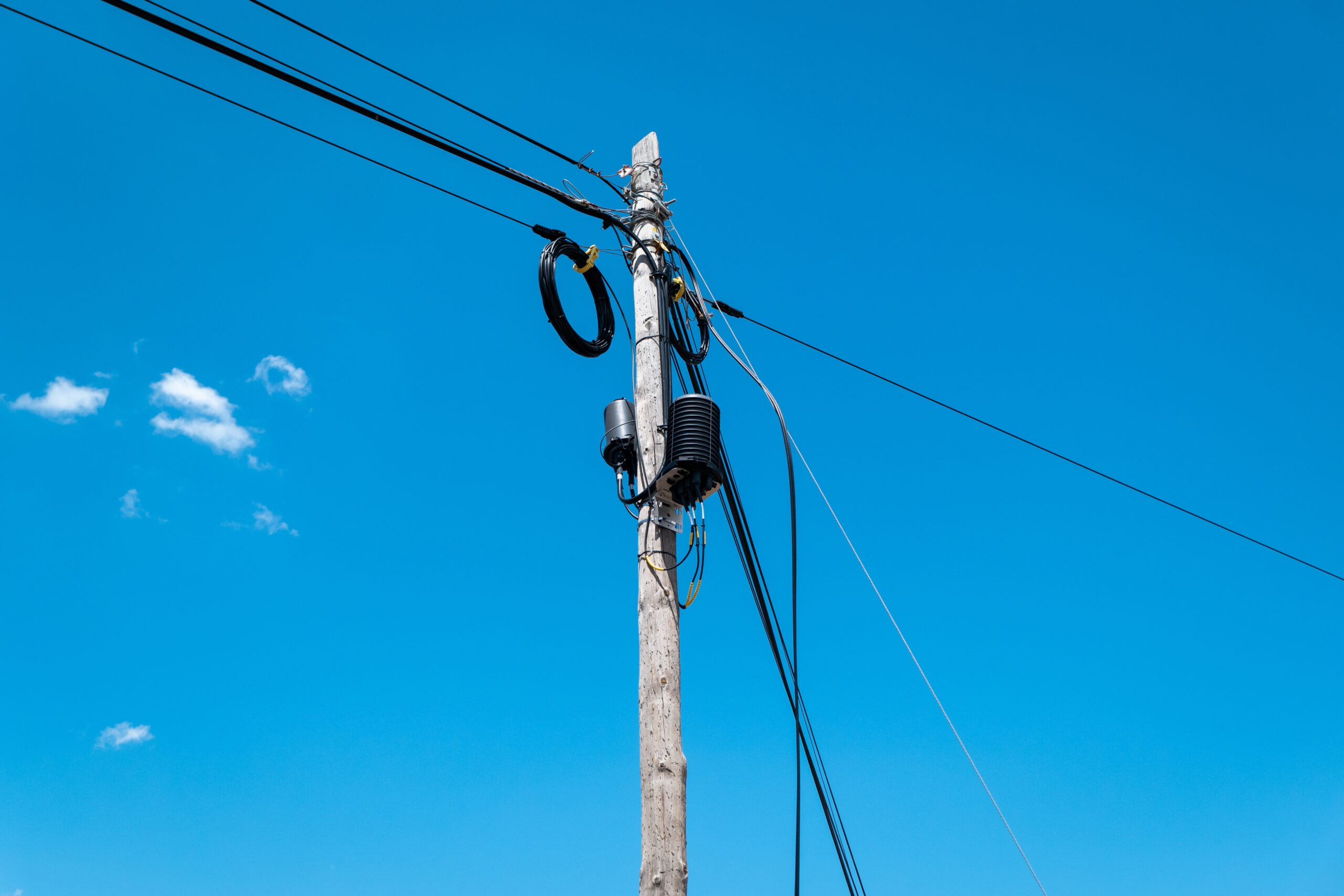 In subcommittee meetings this fall, people you will never meet are deciding how your poles get loaded for the next five years.The 2028 National Electrical Safety Code closed its comment period in March 2026 and is on track to take effect February 1, 2028. The full schedule is published by IEEE. That feels far away. It isn’t.
Why a 2028 code is a 2026 problem
The NESC does not reach backward. New work, including fiber attachment and make-ready, is judged under the code in effect when the work is performed, not the code the pole was built under.
Run the dates. BEAD builds, USDA ReConnect projects, and cooperative fiber are signing joint use agreements now with completion dates in 2029 through 2031. Work that starts under the 2023 code will often finish under the 2028 code. The pole you set this year is a 40 year asset. The agreement you sign this year may outlast the code it was written against.
The clearance problem a lot of older systems don’t see coming
Loading is not the only thing a new attacher runs into. Clearance is the other half.
Standard pole height has moved from 35 feet toward 40 feet over the past generation, mainly because the communication space at the top of the pole has gotten more crowded, not because the power space needed more room. A 35 foot pole set decades ago was sized for one tenant. Fit a fiber attachment on it and the pole now has to hold the power clearances it always carried, the required separation to the communication space, and the attacher’s clearance to ground, all inside a height that was never built for three tenants.
Ruling span compounds it. A longer ruling span sags more under ice and wind, and that sag eats into ground clearance at midspan, not at the pole. A cooperative with old 35 foot poles on long ruling spans may already be close to the clearance floor with its own conductors before an attacher ever shows up.
A pole can pass loading analysis clean and still fail clearance. The fix then is a taller pole or a shorter span, not a stronger one, and that is a capital decision worth raising with the board before attachment season, not during it.
What is actually on the table
From the 2028 preprint and subcommittee work, the areas most relevant to a pole owner:
• Pole strength and loading. Updated ASCE wind and ice maps, refined load factors, and expanded calculation examples.
• Joint use grounding and bonding. Every pole ground bonded to both the neutral and the communication messenger, to limit worker voltage exposure.
• Construction grades. Clarified Table 242-1 on which grade applies in which joint use situation.
• Communication space clearances. Revised separations for wireless facilities and between supply equipment and communication space.
• A new Part 5 on generating stations and grid-connected distributed energy.
These are proposals, not final text, and can still change before August 2027. The direction, though, is more rigor on loading and bonding right as your poles take on the most new attachments in their history.
Five things to do before the code lands
1. Baseline the inventory. LiDAR, UAV inspection, and 3D scanning turn an estimate into a data set you can reuse for every attachment request and storm hardening decision.
2. Don’t take attacher-supplied loading analysis at face value. You set the criteria. If your standard is higher than code, their analysis has to meet it.
3. Name the code version in the joint use agreement. Silence on this in 2026 becomes an argument in 2029, probably after a failure.
4. Treat make-ready as a hardening opportunity. If a pole is coming out anyway, the marginal cost of a stronger class or composite crossarm beats a standalone replacement program later.
5. Settle your grounding and bonding standard once. If the bonding proposal lands as written, every joint use pole your crews touch carries it. Decide it as a construction standard now, not pole by pole in the field.
The broadband connection nobody budgets for
Cooperatives entering broadband budget the fiber, the electronics, and the labor. What gets underestimated is the condition of the poles the fiber goes on. A system that hasn’t run a full inspection cycle in a decade doesn’t know its replacement rate until the loading analysis comes back, and by then it’s a construction cost on a funding deadline, not a line item in a grant application.
Where Finley fits
Finley works both sides of the pole: pole inspection, UAV and LiDAR scanning, pole loading analysis, joint use services, and distribution design on the electric side; network design, make-ready engineering, and funding application support on the broadband side. The same pole data serves both.
The bigger need as attachment requests arrive in volume is capacity. Most cooperative and municipal engineering staffs were sized to run a distribution system, not to process a surge of attachment applications and negotiate make-ready against someone else’s funding deadline. Finley can function as an extension of that staff rather than an outside vendor: reviewing attacher-submitted engineering against your standard, running the loading and clearance analysis that flags which poles need replacement before a crew shows up, and absorbing the surge so your own team stays on the distribution system. We work inside your process and report to your engineering staff.
For more on folding hardening decisions into make-ready work, see our whitepaper on system hardening. Visit finleyusa.com or call 800-225-9716.