

What Google’s 396 MW Geothermal Deal Actually Signals for Cooperatives and Municipal Utilities
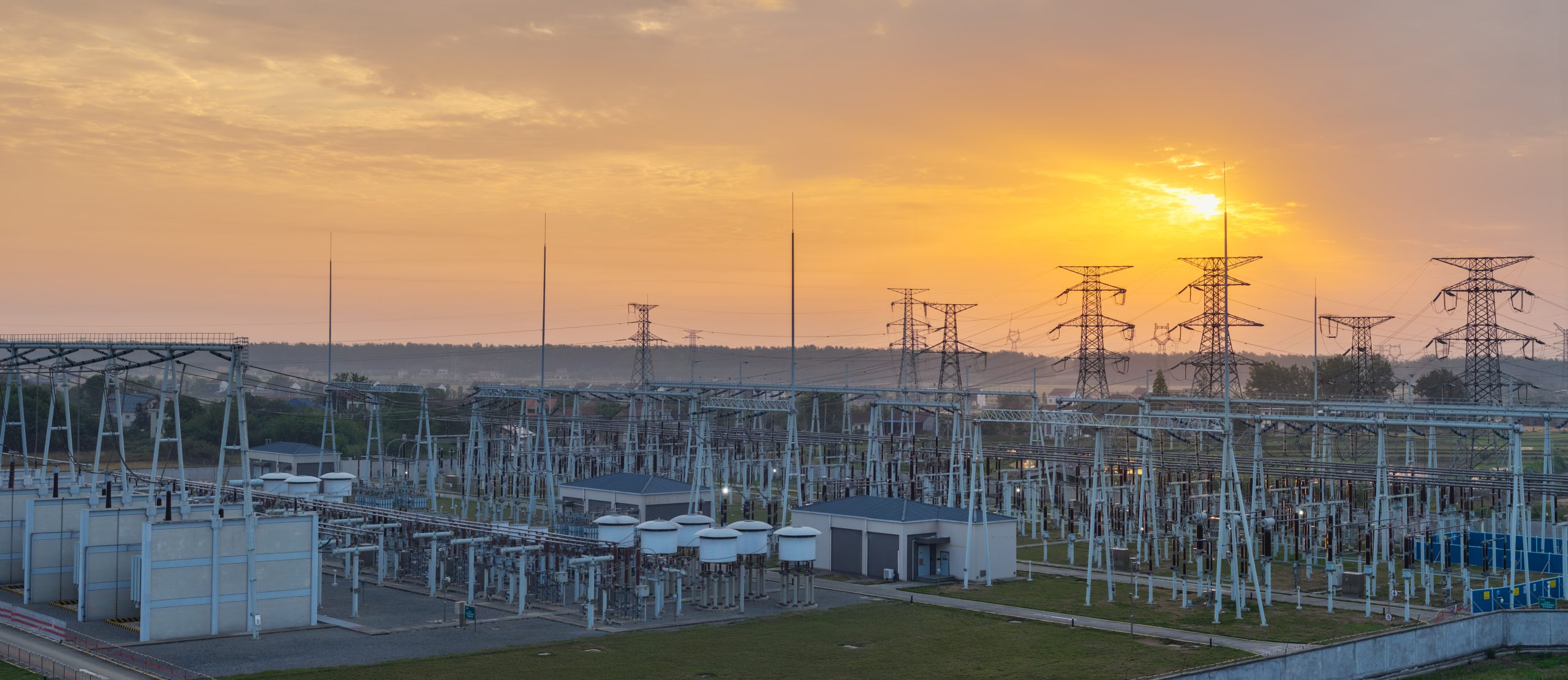 On September 2, Google signed a power purchase agreement with Fervo Energy for 396 MW from the Cape Station enhanced geothermal project in Beaver County, Utah. The plant is scheduled to come online in 2028 at 500 MW, with room to grow past 1 GW. The agreement carries an option to expand Google’s offtake to 996 MW by June 2030. It is the largest geothermal offtake the data center sector has seen.
If you manage a distribution cooperative in Nebraska or a municipal utility in Missouri, your first reaction is probably that this has nothing to do with you. You are not drilling wells in Utah. You are not negotiating with a company that went public this year at a $10 billion valuation.
That reaction is half right. The geothermal is not the story. The deal structure is, and that part is coming to your service territory whether or not a single megawatt of enhanced geothermal is ever built in your state.
The Nevada deal buried in the Utah headline
The Cape Station agreement is a direct offtake. Google buys the output. That model works when the buyer is one of the largest companies on earth and the plant is purpose built for a campus that may not exist yet.
The more instructive deal is the one it grew out of. In 2024, Google and NV Energy filed a rate structure with Nevada regulators called the Clean Transition Tariff. Under it, NV Energy signs the power purchase agreement with Fervo for 115 MW, then sells that power to Google at a set rate. Google pays the difference between the cost of the geothermal and the cheaper resource the utility would otherwise have selected under least cost planning rules.
Look at what that structure does. The term of the utility’s contract with the generator is matched to the term of the customer’s commitment, so the utility is not left holding a capacity obligation if the customer walks. The customer who wants the premium attribute pays for the premium attribute. Other ratepayers are insulated from the cost of a resource they did not ask for. The tariff has a floor, originally set at 5 MW of monthly load, that defines who qualifies.
That is not a clean energy story. That is a cost allocation story, and it is the same problem sitting in front of every cooperative and municipal utility that has taken a call from a site selection consultant in the last 18 months.
The question actually headed for your board
As of May 2026, the Edison Electric Institute counted 23 states with at least one approved large load tariff and seven more with proposals pending. Those tariffs share a shape. Long contract terms, often 10 to 20 years. Minimum billing provisions, frequently set at 70 to 100 percent of contracted demand regardless of what the customer actually uses. Collateral or letters of credit. Exit fees. Direct assignment of study, interconnection and distribution upgrade costs to the customer causing them.
Cooperatives are already in this. East Kentucky Power Cooperative has a data center tariff on file. Tri State Generation and Transmission filed one with FERC, and its own review of 11 large load tariffs found an average minimum bill of 80 percent of contracted demand, an average contract length of 14 years, security averaging seven years of minimum bills, and exit fees averaging five years of minimum bills. The threshold that triggers those tariffs ranged from 5 MW to 500 MW, averaging 114 MW.
The reason those numbers are that aggressive is instructive. AEP subsidiaries in Indiana, West Virginia and Kentucky acquired 750 MW of generating capacity for data centers that never materialized. Somebody pays for that capacity. If the contract was not written carefully, it is the existing membership.
Here is the uncomfortable part. The 50 MW to 300 MW inquiry that arrives at a cooperative or a city utility usually arrives with a letter of intent drafted by the other party’s counsel, a demand for a load serving commitment in weeks, and a request for confidentiality that limits who you can consult. If you do not already have a large load tariff, a study fee, a minimum bill provision, a credit requirement and an exit mechanism, you are negotiating those terms under time pressure against a counterparty that has negotiated them a dozen times. Most do not have them.
Five things to settle before the call comes
None of these require a decision about data centers. They are the homework that lets you answer quickly when somebody asks.
- Know your real headroom. What is the largest single load each substation can serve today without violating voltage drop or loading criteria? Can it be served from one feeder or does it need several? One meter or several? Primary or secondary service, and if secondary, who buys a transformer that size and do you order two so you have a spare? Chris Smart made this point in Finley’s data center white paper and it has not gotten less true. A load flow and substation capacity analysis answers it in weeks. Guessing answers it wrong.
- Talk to your power supplier before you need to. Most cooperatives and municipal utilities do not generate. Your G and T or wholesale provider has to run its own generation, transmission and substation studies, and its lead times and cost exposure drive yours. Find out now what it takes for them to make a major change, what it costs, and how long it takes.
- Model more than one scenario. Reported data center requests run anywhere from 20 MW to over 3,000 MW. Planning for a single number is how utilities end up either turning away a viable project or committing to capacity they cannot fill. Build the 25 MW case, the 100 MW case and the 300 MW case before anyone asks.
- Price transmission honestly. If new transmission is required, that is its own undertaking. In many states a project crossing roughly 1.5 miles of new transmission line triggers a Certificate of Convenience and Necessity process that runs three years at a minimum. A customer promising energization in 24 months needs to hear that early, from you, with a date attached.
- Have the commercial terms drafted in advance. Minimum bill percentage, contract term, study fee, collateral, exit fee, ramp schedule. Draft them when nobody is in the room. The national averages give you a defensible starting point rather than a number you invented under deadline.
Notice that Cape Station does not come online until 2028. A cooperative that starts a long range plan today, runs its studies, orders long lead equipment and builds a substation and tie line is working in roughly that same window. The timeline is not generous and it is not negotiable.
The fiber question that arrives with the power question
Large computing loads do not site on power alone. Site selection screens for water for cooling, climate and disaster risk, available workforce, security, and high bandwidth connectivity. In a lot of rural territory, the entity that knows where the fiber is, what capacity it has and who owns it is the same cooperative being asked about the substation.
That is leverage, and it is frequently unused. A community that can show a credible power path and a credible fiber path in the same conversation is a far more serious candidate than one that can show a transformer. It also works the other way. A cooperative that has already built out broadband through BEAD or USDA programs has route, conduit and middle mile assets that may have commercial value in a load conversation it has not yet priced.
The same discipline applies in both. Know what you have, know what it costs to extend it, and have the number before somebody asks for it.
Where Finley Fits
Whether your board and community ask you to pursue a large load, the answer is legitimately different in Beaver County, Utah than it is in a county of 4,000 people with one substation and an aging 69 kV tie.
What we do is make sure the decision is made with real numbers. That includes voltage drop and load flow analysis, substation capacity analysis, transmission studies, construction work plans and long-range strategic plans, make ready engineering, right of way and easement work, permitting and environmental filings, funding application support, and full engineering, procurement and construction delivery when a utility would rather hand the whole project to one accountable party.
If a site selection consultant has called you in the last year, the useful next step is a capacity analysis, not a press release. If nobody has called yet, the useful next step is a long range plan that tells you what your system can absorb, because the inquiry does not come with a 90 day warning.
Start here: read our white papers on ensuring power readiness for data centers and on long term planning, then call us at (800) 225-9716 to talk through what your system can actually serve.